Home › Industrial and Heavy-Duty Asphalt Paving
Handle heavy traffic with confidence using industrial asphalt paving in Oklahoma City, OK. We design thicker sections and strong bases for truck yards, docks, and warehouses. Request engineering driven pavement recommendations and pricing today.
Precision Asphalt Oklahoma City provides professional industrial asphalt paving throughout Oklahoma City, OK, Oklahoma and the surrounding area. Our licensed, insured crew delivers safe, clean, on-time work with a free estimate before anything begins. Call (405) 696-4325 or request your free quote.
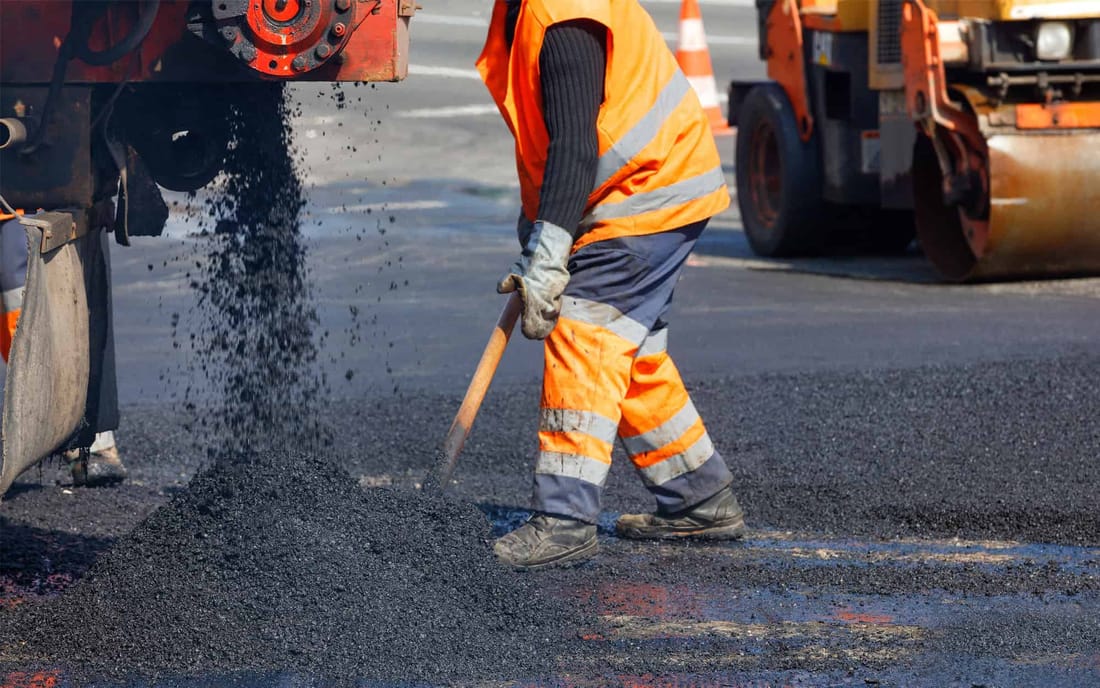
Industrial Asphalt Paving Built for Heavy Loads in Oklahoma City
Industrial asphalt paving is not the same as putting in a neighborhood driveway. At facilities that run semi traffic, forklifts, loaded trailers, and heavy equipment all day, the asphalt design, thickness, and base preparation have to be engineered for serious weight and turning stress. Precision Asphalt Oklahoma City focuses on this kind of work, so we design every industrial project around the actual loads and traffic patterns at your site.
When we look at an industrial yard, loading dock, or plant access road, we do not start with a one-size-fits-all blueprint. We measure turning radiuses, identify areas where trucks stop and start, and note where water currently stands after a rain. These details drive the pavement section we recommend, from subgrade treatment to base thickness to asphalt mix selection.
For Oklahoma City clients, we also factor in our freeze-thaw cycles, summer surface temperatures that can exceed 140°F, and the clay-heavy soils that expand and contract. All of these local conditions affect how industrial asphalt should be designed if you want a surface that lasts 15 to 25 years instead of needing major repairs after 5.
How Industrial and Heavy-Duty Asphalt Paving Is Designed
Heavy-duty asphalt work starts at the design table, not at the paver. Precision Asphalt Oklahoma City typically follows a clear process when we engineer an industrial pavement:
First, we assess the subgrade. We test the existing soil for strength and moisture content. In many parts of Oklahoma City, native clay holds water and loses strength when saturated. Where we find weak subgrade, we may undercut and replace a set depth with select fill, use lime or cement stabilization, or add a thicker aggregate base to spread loads.
Next, we determine base requirements. For truck yards and loading areas, a common industrial section might include 6 to 10 inches of compacted crushed aggregate base, sometimes more in high-impact areas like dumpster pads or fuel islands. We compact in multiple lifts and test for density to avoid future rutting.
Then we select asphalt mixes and layer thickness. A light industrial parking area might use 2 inches of surface over 3 inches of binder. A heavy truck dock or equipment access lane may get 2 inches of surface over 4 to 6 inches of heavy-duty binder, or a multi-lift design that can be selectively milled and overlaid later. In some cases, we recommend polymer modified asphalt for better resistance to rutting during Oklahoma heat waves.
Finally, we plan joint locations, drainage slopes, and reinforcement for known trouble spots like dumpster pads or areas with point loads from outriggers. On some industrial sites we pour reinforced concrete pads in those isolated locations and tie them into the asphalt to prevent early failure.
The Industrial Asphalt Paving Process on Your Site
Once the design is nailed down, the construction process for industrial asphalt paving follows a strict sequence so the finished surface can handle heavy service from day one.
First, we perform site preparation and grading. Precision Asphalt Oklahoma City will remove existing pavement or unsuitable soils, rough grade to establish drainage slopes, and compact the subgrade with appropriate rollers. Where necessary, we install geotextile fabric over weak soils to help bridge soft spots and support the aggregate base.
Second, we install and compact the base. Crushed stone or recycled asphalt base is placed in layers, each usually 3 to 4 inches compacted, and rolled with vibratory equipment. We check elevations frequently so that when asphalt is placed, water flows to inlets, swales, or edges, instead of ponding in traffic lanes.
Third, we pave the asphalt in multiple lifts. Industrial projects rarely use a single 2 inch lift. Instead, we place a thicker structural binder course first, compact it, then place the surface course with a consistent slope and smooth finish. Our crews keep truck deliveries timed so the paver can run continuously. This minimizes cold joints, which are weak points that can crack prematurely.
Fourth, we finish details. This includes handwork around utility covers and dock plates, tying in neatly to existing pavement or concrete, and applying striping or markings suitable for truck traffic. On some industrial projects in Oklahoma City, we also add protective curbing or wheel stops where repeated trailer impacts are likely.
Finally, we coordinate a controlled opening to traffic. Heavy trucks should not be allowed on the new surface until it has cooled and set properly. We schedule work phases so that your operations can keep running while sections cure, often using staged areas or temporary access routes.
Local Conditions That Affect Industrial Asphalt Performance
Oklahoma City’s climate and soils are tough on industrial pavements, and any design that ignores those realities will not hold up. Precision Asphalt Oklahoma City factors three local issues into every heavy-duty project.
Heat: In summer, black asphalt can reach temperatures high enough to soften ordinary mixes. Under heavy semi traffic, soft asphalt will rut. That is why we often specify mixes with stiffer binders, higher quality aggregates, or polymer modifiers for areas with constant heavy loads or tight turning, such as terminal yards or distribution centers.
Moisture and clay soils: Many industrial sites here are built on expansive clay. When water infiltrates through cracks or at the pavement edge, the subgrade can pump and lose support, which leads to alligator cracking and potholes. We address this by building adequate base thickness, ensuring positive drainage, and sealing joints and edges so water cannot sit at the pavement structure.
Freeze-thaw cycles: Although Oklahoma City does not see the harsh winters of northern states, we do have enough freeze-thaw activity to damage saturated pavements. Proper slope, functioning inlets, and intact seals are essential. For industrial customers, we often recommend a periodic sealcoat and crack sealing plan, not for looks, but to keep water out of the structure and protect your investment over decades.
Cost Drivers, Lifespan, and Maintenance for Heavy-Duty Asphalt
Industrial asphalt paving is a capital investment, and the cheapest bid is rarely the lowest cost over the life of the pavement. Precision Asphalt Oklahoma City is direct about what drives price so you can budget intelligently.
Major cost factors include removal of existing materials, subgrade correction, base thickness, asphalt thickness, and mix type. For example, a warehouse employee parking lot with light car traffic might only need a moderate section, while the truck court behind the same building can require double the base and asphalt thickness. It costs more up front, but it also avoids constant patching and downtime.
Site access and phasing also affect cost. Working inside an active plant or terminal usually means night or weekend work, phased closures, and more traffic control. We plan these details with your team so that critical operations stay open while we rebuild driving lanes and loading areas.
With correct design and installation, most industrial asphalt pavements in Oklahoma City can deliver 15 to 25 years of service. Protecting that lifespan requires basic maintenance. Crack sealing, localized patching of early problem spots, and periodic mill and overlay in high-stress lanes are usually more cost effective than full reconstruction. We can set up a maintenance schedule that fits your operating windows so you never face a surprise major failure that disrupts shipping or production.
What Oklahoma City Facility Managers Should Evaluate Before Hiring
Industrial asphalt paving is specialized work, and not every paving outfit is set up for it. Before you hire a contractor, there are several points you should verify. Precision Asphalt Oklahoma City encourages potential clients to ask these same questions of us.
First, ask for specific project experience that matches your facility. For example, distribution centers on the I 40 corridor, manufacturing plants with heavy forklift traffic, oilfield or utility yards, or bus and truck terminals. A contractor that only shows residential driveways or light commercial lots may not be prepared for industrial demands.
Second, review their proposed pavement section and mix designs. A serious industrial contractor should be able to explain why they are recommending a particular base depth, asphalt thickness, and mix type, and how those choices tie to your expected truck counts and load types.
Third, clarify their approach to drainage and transitions. Any paving plan for an Oklahoma City industrial site should address how runoff leaves the surface, how it ties into existing storm systems, and how the new asphalt will meet existing concrete docks, scales, or slabs without creating bumps that damage equipment.
Finally, confirm schedule, phasing, and safety planning. Industrial sites often require background checks, orientation, PPE, and strict traffic control. We coordinate with your safety manager, attend site orientation, and build a phasing plan that keeps your trucks, employees, and equipment safe while work is ongoing. This level of planning is as critical as the asphalt mix itself if you want a smooth project that does not disrupt your operations.