Home › Asphalt Pathways, Sidewalks, and Trails
Enhance your site with asphalt pathway paving in Oklahoma City, OK. We build smooth sidewalks and multi use trails for parks, schools, and campuses. Contact us for design assistance and a detailed trail paving quote.
Precision Asphalt Oklahoma City provides professional asphalt pathway paving throughout Oklahoma City, OK, Oklahoma and the surrounding area. Our licensed, insured crew delivers safe, clean, on-time work with a free estimate before anything begins. Call (405) 696-4325 or request your free quote.
Asphalt Pathways, Sidewalks, and Trails in Oklahoma City
In Oklahoma City, pathways and sidewalks do more than get people from point A to point B. They connect neighborhoods, schools, parks, churches, and small businesses. At Precision Asphalt Oklahoma City, we build and repair asphalt pathways, sidewalks, and trails that stand up to Oklahoma weather while fitting the character of your property.
We work with HOAs in Edmond and Moore, managers of apartment communities along NW Expressway, churches on the south side, and park departments across the metro. Whether you want a simple walking path behind a duplex, a school loop for student drop-off, or a multi-use trail along a greenbelt, we tailor the design to real traffic and local conditions, not a one-size-fits-all template.
Every project starts with a site walk, not just a satellite view. We look at existing drainage, trees, fences, utilities, and how people actually use the area today. That is how we avoid common headaches like puddles across the path after a summer storm or cracks where tree roots were not accounted for.
Planning and Design for Oklahoma City Properties
Good asphalt pathway paving starts with smart layout and cross-section design. During planning, Precision Asphalt Oklahoma City checks elevation changes, soil type, and how water already moves across your property. On older OKC neighborhoods like the Paseo or Gatewood, we often need to match existing concrete walks or tight lot lines. In newer subdivisions in Yukon or Mustang, there is usually more room to adjust alignment to follow natural contours.
We discuss with you how people will use the surface. A simple walking path around a backyard may only need 4 feet of width, while a school or park trail often needs 8 to 10 feet to safely handle walkers, strollers, and bicycles. For commercial sites or churches that expect event crowds, we may recommend extra width near entrances and gathering areas.
Slope and drainage are critical in Oklahoma thunderstorms. We design just enough cross-slope so water runs off the surface into grass or swales instead of standing on the path. Where soils are heavy clay, common on the south and east sides of the metro, we may add underdrains or adjust grading so water does not get trapped under the asphalt and cause early cracking.
How We Build Asphalt Pathways, Sidewalks, and Trails
Most of the long-term strength of a pathway comes from what is under the blacktop. Precision Asphalt Oklahoma City follows a step-by-step process that fits local soil conditions and expected use.
1. Layout and marking: We paint the path alignment on the ground, mark utilities, and flag trees or structures that need protection. On tight urban lots, we sometimes stake exact edges so you can see where fences, sheds, or playsets may need small adjustments.
2. Excavation and grading: We remove topsoil, roots, and any soft spots, then grade to the planned elevation. In low areas that stay wet, we often over-excavate and bring in a drier base aggregate so the path does not settle later.
3. Base installation: We place and compact a crushed stone base, typically 4 to 6 inches for light residential use, and 6 to 8 inches for busy public trails, school loops, or golf cart paths. In parts of Oklahoma City with expansive clay, we may use a geotextile fabric under the base to separate it from the native soil.
4. Asphalt paving: For walkways and multi-use trails, we typically install 2 to 3 inches of hot mix asphalt in one or two lifts, depending on use. Heavier use areas, such as around playgrounds, parking lot connections, or golf course crossings, may get thicker sections or a stronger mix.
5. Compaction and finishing: We compact the asphalt with a roller and plate compactors around edges to create a tight, smooth surface. Edges can be left with a gentle asphalt slope or supported by topsoil and grass, depending on your preference.
6. Striping and features: If you need centerlines, distance markers, ADA crossing markings, or signage pads, we handle those after the asphalt cools. Schools and parks often ask for half-mile or quarter-mile markers, which we integrate into the design.
Material Options and Design Choices
Not every asphalt pathway has to look the same. Precision Asphalt Oklahoma City can adjust materials and details to match how and where the path will be used.
Mix types: For light pedestrian use in a backyard or garden, a standard fine-graded asphalt mix gives a smooth, comfortable surface. For multi-use trails with bicycles, scooters, or maintenance vehicles, we often choose a denser, slightly coarser mix that resists scuffing and rutting.
Thickness and base: Residential garden paths that only see foot traffic can use a thinner asphalt section over a good base. Trails along the Oklahoma River, school campuses, or community parks that see carts and small maintenance vehicles need thicker asphalt and base to prevent waves and dips.
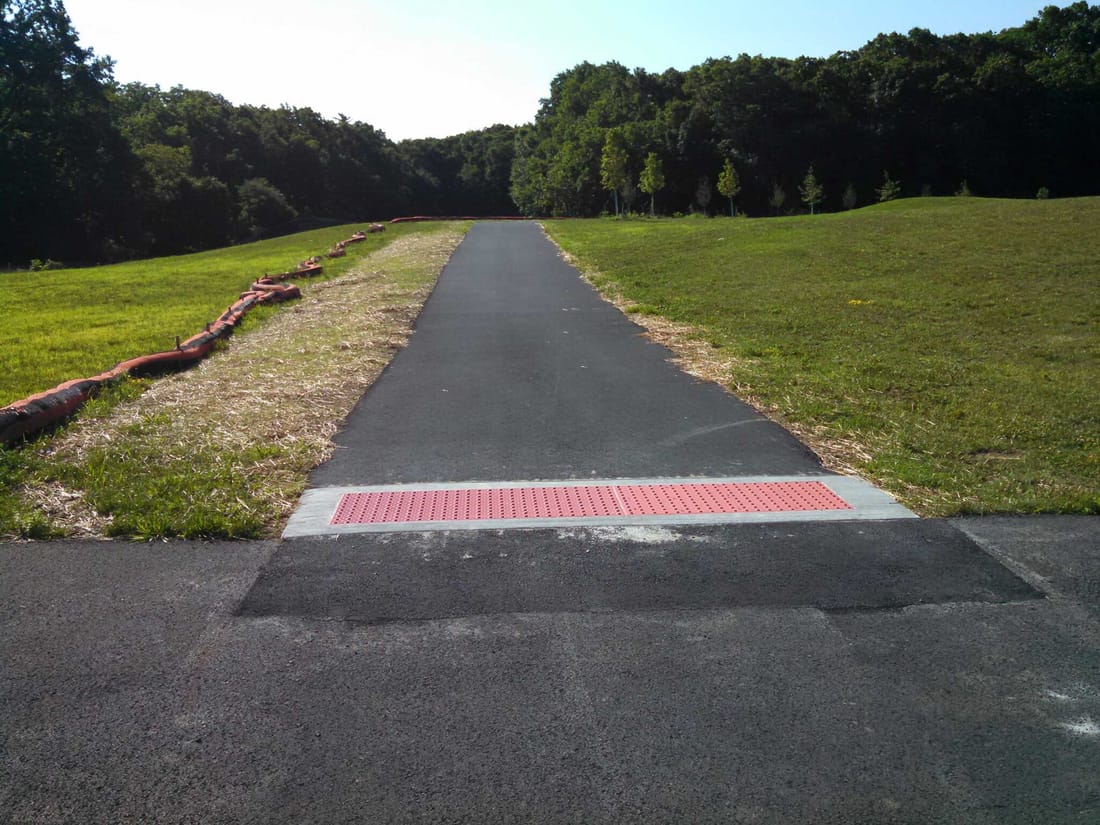
Edges and transitions: We can taper edges into lawn, tie into existing concrete sidewalks, or pour concrete aprons where asphalt connects to steps, ramps, or door thresholds. For ADA routes, we pay close attention to max slopes, landings, and transitions so people using mobility devices have a smooth, safe route.
Aesthetic touches: Where appearance is important, such as in front of churches on Classen or in historic neighborhoods, we can use clean, consistent edging, integrate decorative rock borders, or coordinate with adjacent concrete or brick features. While asphalt is typically black, careful rolling and edge shaping makes a big difference in how finished it looks.
What Affects Cost for Asphalt Pathway Paving
Path and trail projects in Oklahoma City can vary widely in cost, even when they appear similar in size. Precision Asphalt Oklahoma City explains pricing up front so you can make informed decisions and adjust the scope where needed.
Key cost factors include:
Length, width, and thickness: More square footage and thicker sections mean more materials and labor. A narrow 4-foot backyard path will be far less than a 10-foot-wide greenbelt trail, even at the same length.
Site access: If our crew and equipment can get close to the work area, such as along a street or alley, costs stay lower. Backyards with no vehicle access, or trails behind homes where we must use smaller equipment and more handwork, take longer and cost more.
Soil and drainage corrections: Soft, saturated, or expansive soils common in some OKC neighborhoods may require undercutting and replacement with better base material. Areas that need swales, culverts, or small retaining edges to handle stormwater also add cost.
Demolition: Removing old, broken concrete or asphalt walks, hauling off debris, and dealing with tree roots or old fence footings can be a significant part of the budget. In many older OKC suburbs, failed concrete sidewalks need full removal before we can build a stable asphalt replacement.
Finishes and extras: Striping, ADA ramps, detectable warning panels, bollards, or integrated drainage grates will add to the total. We separate those items on your quote so you can choose what is essential now and what could be phased later.
Common Issues and How We Prevent Them
Poor pathway installations tend to show problems within a few seasons in Oklahoma City. Hot summers, heavy rains, and winter freeze-thaw cycles will quickly expose shortcuts. Precision Asphalt Oklahoma City focuses on the details that prevent these issues before they start.
Standing water: Puddles on a path are more than a nuisance. Water seeps into small cracks, then expands when it freezes and breaks the surface apart. We prevent this by setting correct slopes, checking them during grading, and adjusting on site if we see low spots forming.
Edge breakdown: If the edge of a path is left hanging over soft soil, it will crumble as people walk or ride near the edge. We manage this by compacting edges carefully and recommending backfilling with topsoil and grass, or using stone shoulders in high-traffic areas.
Root damage: Trees are common along OKC streets and in older neighborhoods. When we route a path near tree lines, we consider root zones and try to stay outside the most active areas. Where roots cannot be avoided, we may adjust the design, use root barriers, or discuss with you whether some roots can be safely removed.
Early cracking: Thin asphalt over a weak base will crack quickly. We match thickness and base depth to your actual needs, not just the minimum we can pour. For trails that carry light utility vehicles or maintenance trucks, we design the section to carry that weight from day one.
What to Expect When You Work With Precision Asphalt Oklahoma City
Our goal is to make pathway and sidewalk projects straightforward and respectful of your daily routine. Before we start, Precision Asphalt Oklahoma City will walk the site with you, confirm the final layout, and go over where equipment will access the area and how we will protect lawns, landscaping, and structures.
During construction, we keep communication open. For schools and churches, that often means scheduling noisy work outside service times or school hours. For HOAs and apartments, we provide clear start dates and expected completion so residents know when sections of a trail will be closed.
Most small residential pathways can be built and ready for light foot traffic within a day or two, depending on weather and complexity. Larger trails, especially those with drainage or demolition work, can take several days. We will let you know when the asphalt can be walked on, when it is safe for bikes and strollers, and if any areas need extra curing time before vehicle access.
After the job, we walk the finished path with you, address any questions, and talk about simple maintenance such as keeping edges trimmed, clearing debris, and watching for any early signs of settlement. If you are planning future phases of a trail or campus walkway system, we can help you prioritize which sections to tackle first so your budget does the most good for your property and the surrounding community.